
100% pure mulberry spun silk
140cm wide, 2 x 2 twill weave, 3.3oz/yd²
£89 per metre.
Stock Tartans
- Edinburgh
- Perthshire
- Muted Strathearn
- Murray of Atholl “Modern”
- The Black Watch (Government) – Available in October. Please contact to note interest.
The Timeless Allure of Tartan Silk
There are fabrics that merely clothe, and then there are those that carry stories, stories of distance crossed, borders softened, and craft passed from one generation to the next. Askival Tartan Silk belongs to the second kind.
In its pattern, you can feel Scotland’s heritage, that bold, enduring language of tartan. And in its making, you sense China’s silk legacy, where artistry has long been measured not only in beauty, but in precision. Together, they form something quietly extraordinary: a connection that transcends geography yet remains unmistakably true to its origins.
A Pattern Born of Wool—and Reimagined in Silk
A Pattern Born of Wool, and Reimagined in Silk
Tartan has always had a rich and varied history, most often made with wool fibres, their warmth and structure shaping the iconic look of the cloth.
But this is not wool. This is 100% spun mulberry silk, woven in a 2×2 twill, the same foundational weave language used in traditional wool tartan.
As the fabric forms, the twill weave does more than create texture. It gives the tartan its exquisite clarity, allowing the pattern to appear vivid and alive, while enveloping you in a fabric that feels smooth, soft, and beautifully refined. And where plain weaves can feel flatter, this silk falls with a more graceful elegance, celebrated for its superior drape.
The difference between Spun Silk (Short Fibers) and Reeled Silk (Continuous Filament)
Askival Tartan Silk is 100% Spun Mulberry Silk
Spun Silk uses leftover, pierced, or waste cocoons. Because the moth has already chewed its way out, the pupa completes its life cycle and survives.
Reeled Silk is traditional long silk threads requiring the pupa to be killed inside the cocoon via boiling or steaming. If the moth emerges, it breaks the single long continuous fibre.

Silk Twill: A Legacy That Travelled the World
The silk twill weave itself is ancient, first appearing in early civilizations such as Egypt and China. It also goes back to the Tang Dynasty, more than 2,000 years ago. Back then, silk wasn’t ordinary fabric. It was the kind of material reserved for the most ceremonial moments, dressed in honour, worn with pride. And among all the silks, silk twill rose higher than the rest. It became the fabric of royal and official formal dress, where beauty wasn’t just admired—it was officially respected.
And even after centuries passed, the silk’s elegance refuses to disappear. It lives on in the poetry of Bai Juyi, a celebrated Tang poet. He not only praises how silk looks, he also asks what it costs.
In his verses, the shimmering elegance of the palace comes with a hidden truth far away in the countryside. He describes weaving as punishing work, harsh enough to hurt the hands, yielding only a small amount of cloth after endless labour. He then describes the palace dancers who wear the silk as if it were endless and easy. The luxury is treated as if it is disposable, garments discarded, muddied, and forgotten, while the workers who made the silk remain unseen.
Every time silk catches the light, it tells two stories at once:
- one of royal beauty and honoured ceremony
- and one of creation, hands, time, and sacrifice
And if we listen closely, the weave itself seems to say: “Remember my makers.”
And then, along the Silk Road it moved. Merchants carried it across vast distances, bringing it to Persia and Europe. In those times, silk twill was treated as a prized commodity, almost like “hard currency” in trade, something that held value wherever it travelled. European nobles regarded ownership of Chinese twill silk as a mark of status.
In France, during the court of Louis XIV, silk twill found its way into dresses and curtains, and today it still lives on as a treasured witness to history, preserved in museums and remembered as a symbol of refined prestige.
A Fabric Made to Stay Beautiful
Twill is also known for its sturdy character. It is resilient in everyday wear, and more resistant to wrinkles than plain weaves. Fold it, travel with it, return it to your routine, the fabric maintains a smooth, polished grace.
Colour, too, is part of the romance. Silk twill embraces colour exceptionally well. Patterns appear clear and distinct, ideal for intricate prints and personal designs. Even after washing, the tones remain vivid, like a story that refuses to fade.
Luxury You Can Feel
Askival Tartan Silk doesn’t chase attention. It earns it.
Its lustre is soft matte with a gentle silvery luminosity, like moonlight choosing its moment. That luminosity is tied to silk’s natural structure, which reflects light at different angles, giving the fabric a living quality rather than a fixed sheen.
Touch it, and you feel the cool smoothness first, then the comfort. It’s the kind of silk that doesn’t feel fragile. It feels composed.
And beneath its beauty lies performance worthy of luxury:
- Breathability and moisture absorption, so you feel comfortable rather than overheated
- Moisture management that helps silk twill stay pleasant across changing seasons
- A drape that balances structure and fluidity, keeping your styling graceful whether worn loosely or tied into elegant shapes
Even after folding or travel, the silk’s twill weave helps it resist creasing, like a promise that beauty will remain intact.
Why This Matters
At its heart, Askival Tartan Silk is an offering of connection, between two histories that share a belief in craft, patience, and artistry.
Because the most luxurious thing isn’t only what a fabric looks like. It’s what it carries.
A piece of tartan that could only ever be Scottish, now created with the heartwarming touch of mulberry silk. A fabric with roots stretching back centuries, now reintroduced for modern days with quiet confidence.
This is heritage you can wear. This is craftsmanship you can feel. This is beauty that travels, rests, and returns, still with its lustre.
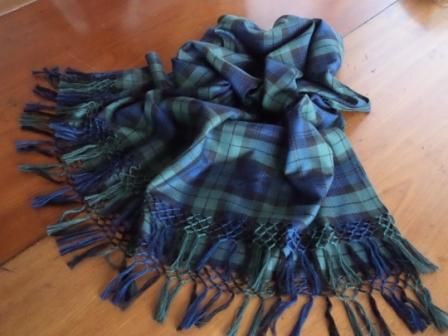
The Black Watch 5 knotted lattice finge
100% silk stole in the Black Watch Tartan with the 5 knotted fringe
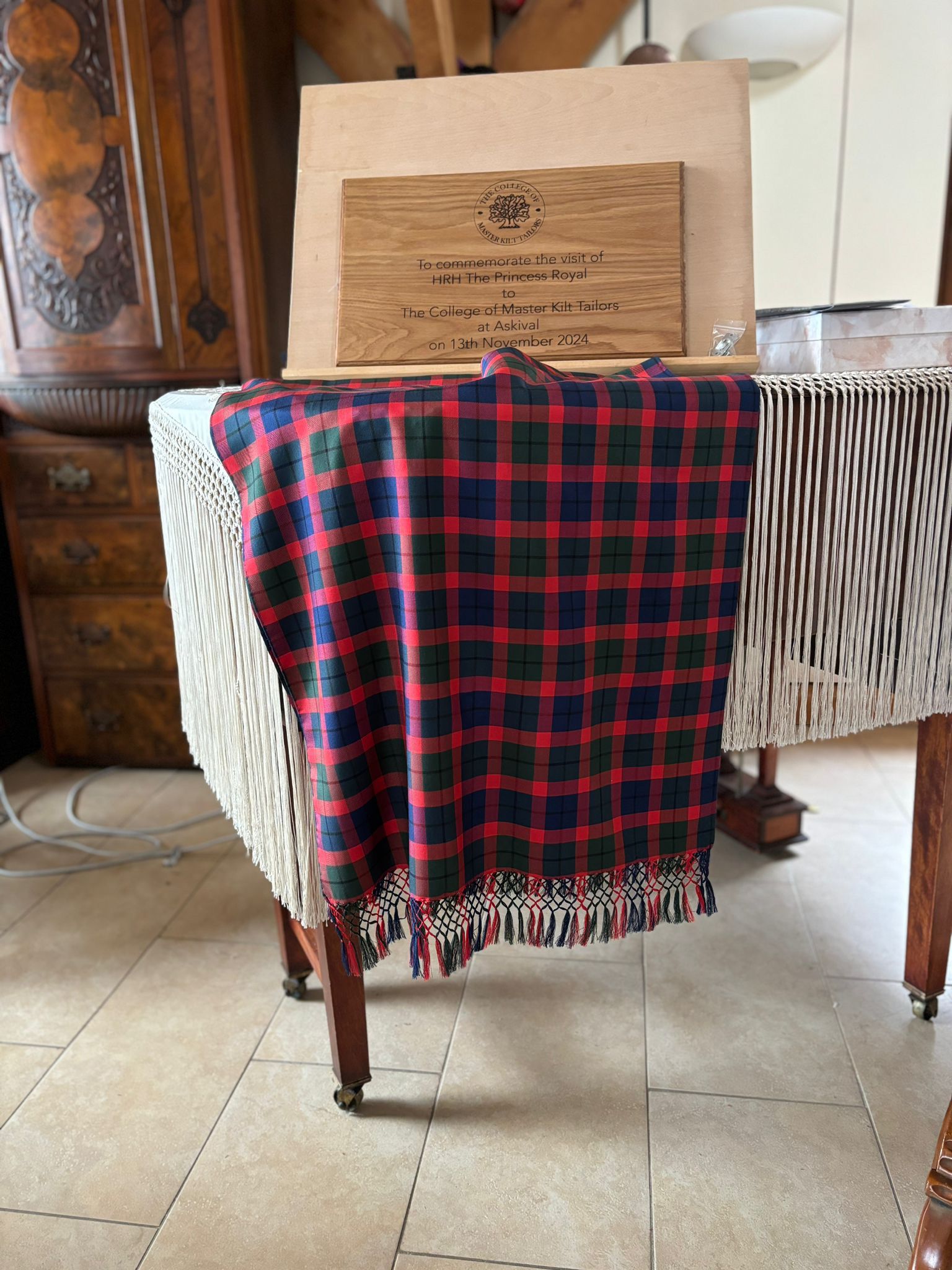
The Princess Royal Visit
100% twill weave silk stole presented to the Princess Royal, November 2024
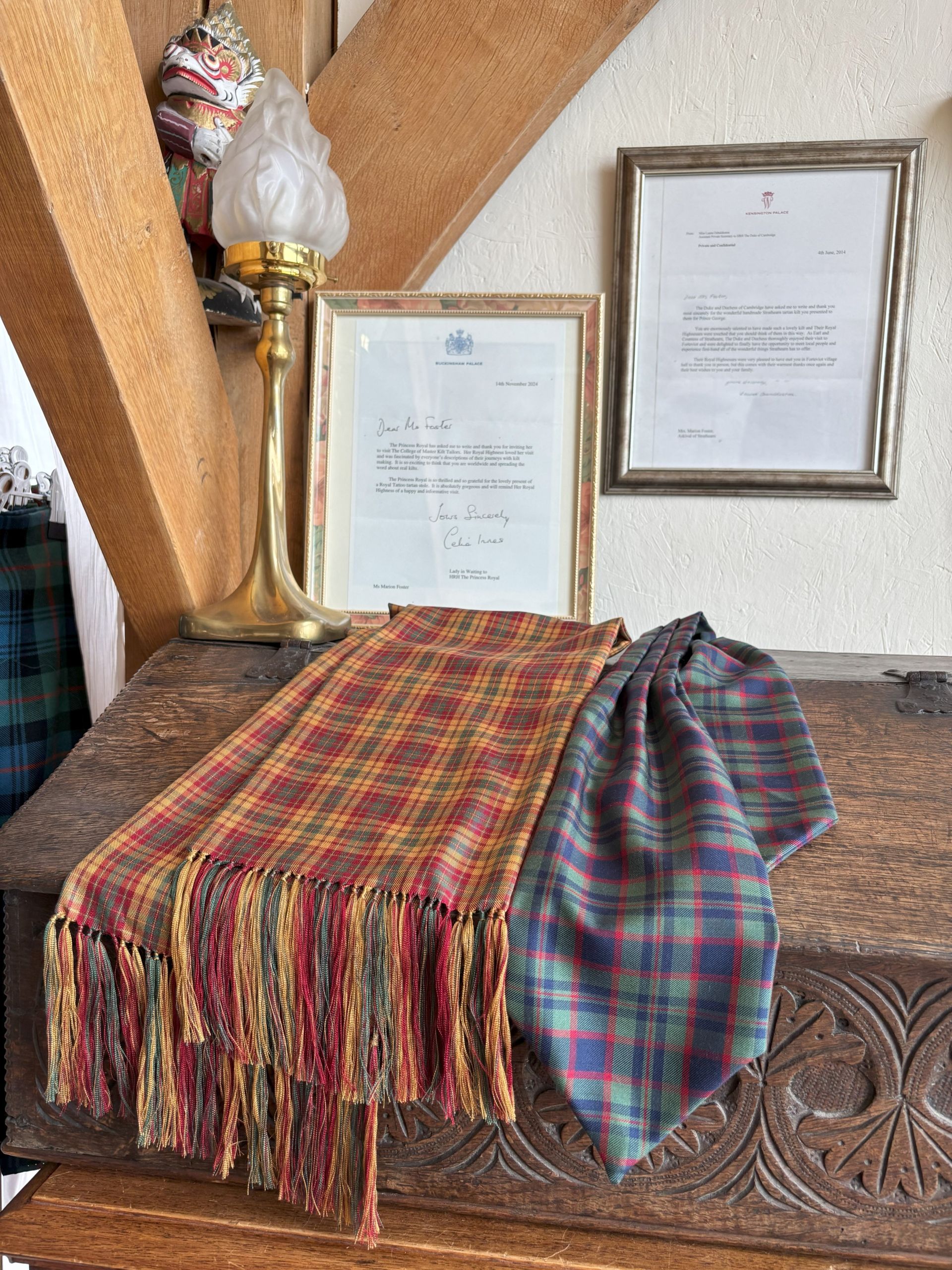
The purled tassled fringe
The purled tassled fringe – the 100% silk Strathearn Muted tartan